History & Heritage
6 min read
Fort Screven: Tybee Island's Military Past
Fort Screven guarded the mouth of the Savannah River for about 50 years. Here is its story, what still stands on Tybee's north end, and how to visit.
Edited by Chirag Tailor
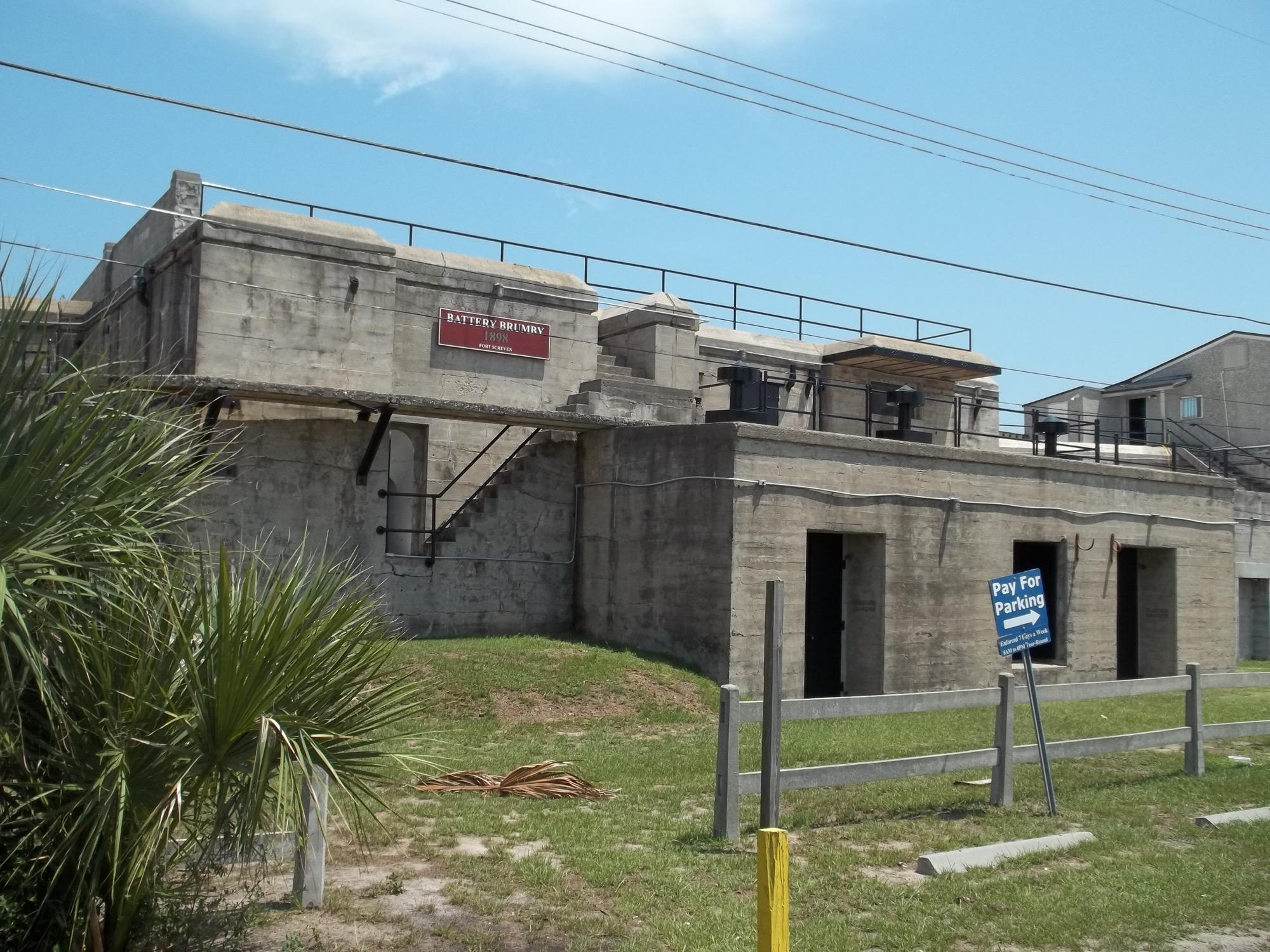
Photo by Ebyabe on Wikimedia Commons · CC BY-SA 3.0
Tybee Island has a fort most visitors drive past without knowing it. The north end is lined with concrete batteries, grassy mounds and old army buildings. Together they once made up Fort Screven, a coast artillery post that watched over the mouth of the Savannah River.
You do not need to be a history person to enjoy it. The batteries are big, odd-looking and easy to walk up to. This guide covers how the fort began, how it ended, and what you can still see today.
How Fort Screven began
The story starts in the 1890s, with a new post at the mouth of the Savannah River. The National Park Service says the fort was ordered built on the north end of Tybee in 1895. It then operated from 1897 to 1947.
The Georgia Historical Society marker at the Tybee Museum dates the post to 1898.
The post was first called Camp Graham. It was later renamed Fort Screven, in honor of General James Screven, a hero of the Revolutionary War. The marker describes the fort as "primarily a Coast Artillery fort."
That phrase matters. Fort Screven was not a walled fort like the brick ones from the 1800s. It was a line of low concrete batteries, built into earth and sand. Guns sat behind thick walls and aimed out to sea.
What a coast artillery post looked like
A post like this was a small town as much as a gun site. Soldiers needed places to sleep, eat and work. So the army built quarters, offices and other buildings around the batteries.
Exploring Southern History notes that a number of these buildings still dot the north end of the island. They once housed the quarters and other facilities of the post.
The batteries were built along the shore. Each one was a concrete structure with a flat top and thick sides, usually banked with earth. If you look closely at the batteries today, you can see the shapes where the big guns once stood.
There was a line of concrete batteries, and some were built for 12-inch coastal guns. That is enough to picture how heavy the defenses were.
The long wind-down
The Georgia Historical Society marker says the War Department declared the fort surplus in 1945. The Town of Tybee, then called Savannah Beach, acquired it. The National Park Service puts the closing and sale to the town in 1947.
The easiest way to say it is this: declared surplus after World War II, and sold to the town by 1947.
What happened next shaped the island. The land the army left behind became part of the town. Buildings that once held soldiers were now part of a beach community. That is a big reason the north end looks the way it does.
What you can see today
The old fort is now the Fort Screven Historic District, which is listed on the National Register of Historic Places. It sits on the north end of Tybee, near the lighthouse.
Here is what to look for on a walk.
- The batteries. These are the big concrete structures near the north end. The one in our photo carries a plaque reading Battery Brumby 1898. Walk around the outside to see how thick the walls are and how the earth is piled against them.
- Battery Garland and the museum. Battery Garland now houses the Tybee Island Museum, run by the Tybee Island Historical Society. The Society's site says it is open to the public. The museum was set up in the old battery in 1961, according to the National Park Service. It is the best place to see the fort's story laid out with photos and objects.
- The old post buildings. Several buildings that once served the army still stand and give the neighborhood its look. They are part of the historic district, so take in the old quarters from the street and respect the people who live nearby.
- The Tybee Light Station. The lighthouse sits right alongside the old fort. It has its own long story, which we leave to a separate guide. Our sister property Sandcastle Inn wrote it up in its lighthouse guide. The short version is that it is 145 feet tall, has 178 steps, and is the oldest and tallest lighthouse in Georgia.
The Historical Society runs the light station and the museum as one visit. Battery Garland is across the street from the lighthouse, and you buy museum tickets at the Light Station.
Another former fort building
One more place ties back to the fort. The Tybee Post Theater was a building of the old post. Our sister inn has a good guide to it: the Tybee Post Theater guide from Sea and Breeze. It makes a good stop after the batteries, since the theater is part of the same north end story.
Visiting Fort Screven
The fort is on the north end of the island. Atlantis Inn is on Silver Avenue, near the south end, about 2 miles away. So treat Fort Screven as a trip, not a stroll. It makes a nice half day, and a good plan for a cooler month when the walking is easy.
A few tips that make the visit smoother.
- Start at the museum or lighthouse. The Historical Society's site at tybeelighthouse.org has the current hours and ticket prices. These change, so check before you go.
- Walk the district on foot. The batteries and buildings sit close together. Comfortable shoes are all you need.
- Plan for parking. Tybee's parking rules and rates are on the City's Parking Services page, and the details change. Read that page before you go. If you are staying with us, parking at the inn is free and on-site, so you can leave your car and decide how to spend the day.
- Pair it with other north end stops. The lighthouse, the batteries and the museum fit in one outing. After that you can head to North Beach, which is a short way off.
For more ideas on where to go after the fort, see our things to do page and our dining page.
Why the fort still matters
Fort Screven is a rare thing on a beach island. It is a full military site that was never torn down. The batteries are still there. The post buildings are still there. A museum sits inside one of the old gun emplacements.
If you only know Tybee for its sand and its pier, the fort adds a second layer. It tells you the island once held an army post for about 50 years. That is a good thing to know on your next walk to the north end.
Stay with us
Atlantis Inn is a 19-room independent inn on Silver Avenue, about 300 yards from the beach. We have four room types, including the Red Room and the Penthouse, and our guests get rooftop access. Parking is free and on-site. Our amenities page has the rest.
Planning a trip around the island's history? Check availability for your dates.
FAQ
Common questions.
Who was Fort Screven named for?
General James Screven, a hero of the Revolutionary War. The Georgia Historical Society marker at the Tybee Museum says the post was named in his honor. Before that, the post was first called Camp Graham.
When was Fort Screven built?
In the late 1890s. The Georgia Historical Society dates the post to 1898. The National Park Service says the fort was ordered built on Tybee's north end in 1895 and operated from 1897 to 1947.
What happened to Fort Screven?
The War Department declared it surplus in 1945, after World War II. The National Park Service says the fort was closed and sold to the Town of Tybee in 1947.
Is there a museum at Fort Screven?
Yes. Battery Garland now houses the Tybee Island Museum, run by the Tybee Island Historical Society. Hours and prices change, so check tybeelighthouse.org before you go.
Is Fort Screven the same as Fort Pulaski?
No. Fort Screven is a coastal-artillery post on Tybee's north end, built in the 1890s. Fort Pulaski is an older brick fort on Cockspur Island, which is run by the National Park Service.
Planning a trip to Tybee?
We’re on Silver Avenue, about 300 yards from the beach — with rooftop access and four room types including the signature Red Room and Penthouse.
Check AvailabilityMore places to stay on Tybee
From the same family of island hotels.